MD Candidate · Researcher · Builder
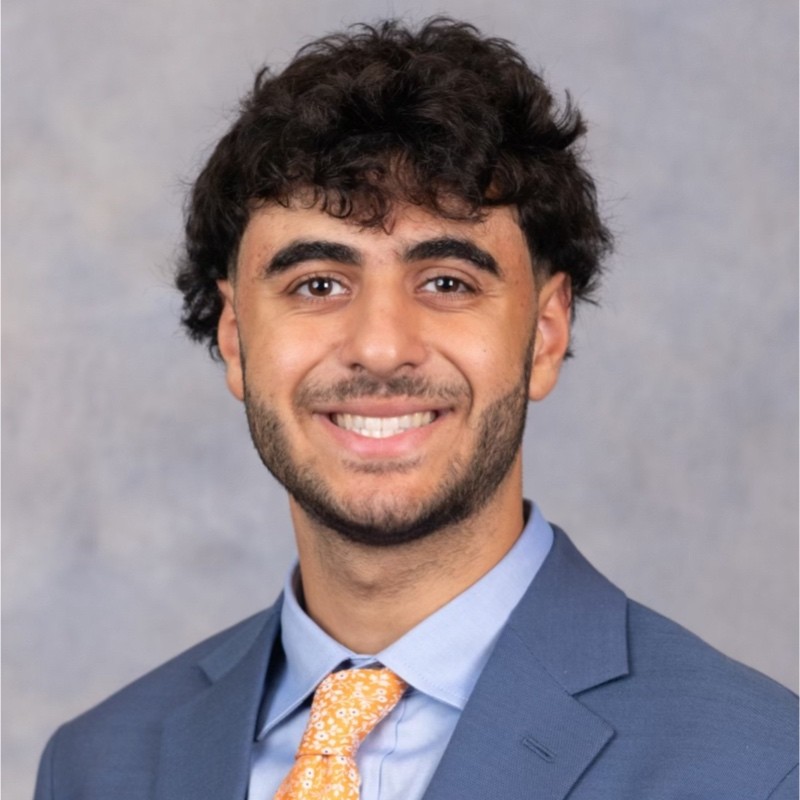
Yusuf Ashktorab
Howard University College of Medicine, Class of 2028
Student Researcher at Stanford Department of Medicine · Physician-scientist passionate about AI in medicine and health equity.
About Me
I am a medical student (class of 2028) at Howard University College of Medicine (HUCM) and a Student Researcher at the Stanford University Department of Medicine (Nephrology), working with Dr. Shuchi Anand and Dr. Maria Emilia Montez Rath on AI applications for Chronic Kidney Disease. My journey in medicine is driven by a deep passion for leveraging technology, particularly Artificial Intelligence, to address health disparities and advance patient care.
I have had the privilege of contributing to impactful research at Stanford University, UCSF, the NIH, and other esteemed institutions, focusing on predictive modeling for vaccine responses, investigating the role of viruses in cancer development, and applying LLMs to diagnose Chronic Kidney Disease of Unknown Etiology (CKDu).
At HUCM, I currently serve as President of the Health Innovation and Technology (HIT) interest group and as VP of Research and Technology for my class. I am committed to fostering a community of learning and innovation, and to establishing the first HBCU medical student-led AI research center.
Beyond research, I am an advanced Santoor musician performing with the Chakavak Ensemble, a former Division 1-level competitive soccer player, and an enthusiast of nature, gaming, and building things.
Research Journey
From the NIH to Stanford and UCSF — exploring AI, immunology, nephrology, and health disparities across leading research institutions.
View Stanford ProfileStudent Researcher
CurrentStanford University — Department of Medicine (Nephrology)
Working with Dr. Shuchi Anand and Dr. Maria Emilia Montez Rath to investigate the use of AI to identify and predict Chronic Kidney Disease of Unknown Etiology (CKDu) in Sri Lanka. Using Epic Cosmos to analyze foundational medical AI models on CKD.
Key Highlights
HBMC Summer Intern
Stanford University — Department of Medicine (Nephrology)
Investigated the use of AI and LLMs to identify and predict Chronic Kidney Disease of Unknown Etiology (CKDu) in Sri Lanka under the guidance of Dr. Shuchi Anand and Dr. Maria Emilia Montez Rath. Developed ML models and presented at multiple national conferences.
SRTP Intern
University of California San Francisco — BCHI-Butte Lab
Conducted a meta-analysis on vaccine outcomes using the public dataset ImmPort, focusing on demographic effects on vaccine response. Developed AI/ML models — the first of their kind — to predict vaccine response using baseline cytokine data and demographics.
Special Volunteer
National Institutes of Health — NCI, Ambs Lab
Contributed to the VirScan NCI-UMD case-control study, investigating viral roles in prostate cancer development with a specific focus on health disparities and racial factors — both computationally and on the bench.
Research Assistant
Howard University — Undergraduate AI/ML Team
Using wearable data and algorithms for early detection of illnesses like COVID-19, with a focus on eliminating health disparities in wearable medicine. Earned CITI certification and completed 3 HarvardEdX TinyML courses.
Special Volunteer
National Institutes of Health — NIDDK, Lutas Lab
Conducted research on how neuromodulation of neural circuits leads to long-lasting changes in motivated behaviors such as eating in mice.
SIP Intern
National Institutes of Health — NHLBI, Bioinformatics Lab
Intern in the Laboratory of Bioinformatics and Computational Biology. Used R and scientific techniques to analyze and compare patient data from AML cancer studies.
Publications & Presentations
Peer-Reviewed Journals
- Ashktorab Y, et al. COVID-19 pediatric patients: symptoms, presentations, and disparities by race/ethnicity in a large, multi-center United States study. Gastroenterology. 2021 Apr;160(5):1842–1844.
- Brim A, Ashktorab Y, et al. Pediatric COVID-19 and Gastrointestinal Symptoms in Africa. Gastroenterology. 2021 Aug;160(5):1842–1844.
Oral Presentations
- Ashktorab Y, et al. From Algorithms to Agriculture: Applying AI Methods to Predict Kidney Disease in Farmworkers. ISN Oral Abstract Presentation; December 2025.
- Ashktorab Y. Current Landscape of AI Models With a Focus on Nephrology. Kidney Clinical Research Conference, Stanford University Department of Medicine, Nephrology; June 2025.
- Ashktorab Y. Learning Medicine and Coding with AI Tools. Invited Presentation, Stanford University Department of Nephrology Biostatistics Core Meeting; May 2025.
- Ashktorab Y. My Experience Extracting Big Data with ImmPort. Invited Presentation at ImmPort Research Seminar, San Francisco; June 2024.
- Ashktorab Y, et al. Extracting and Analyzing Data Using AI Tools in ImmPort. FOCiS 2024, San Francisco; June 2024.
- Ashktorab Y, et al. Leveraging Machine Learning Models and Cytokines to Predict Vaccine Response: Exploring Demographic Influences. UCSF SRTP 2024 Research Symposium; August 2024.
- Exploring, Extracting, and Analyzing Clinical and Immunological Assay Data from ImmPort Using AI Tools. Role of AI in Immunology: Advancing Scientific Frontiers, FOCiS 2025 Virtual Education Symposium; June 2025.
Abstract Presentations
- Ashktorab Y, et al. From Algorithms to Agriculture: Applying AI Methods to Predict Kidney Disease in Farmworkers. ISN World Congress of Nephrology 2026, Yokohama, Japan; March 2026.
- Ashktorab Y, et al. From Algorithms to Agriculture: Applying AI Methods to Predict Kidney Disease in Farmworkers. AMA Research Challenge Poster Symposium; November 2025.
- Ashktorab Y, et al. From Algorithms to Agriculture: Applying AI Methods to Predict Kidney Disease in Farmworkers. HUCM Research Poster Day; August 2025.
- Ashktorab Y, et al. COVID-19 pediatric patients: symptoms, presentations, and disparities by race/ethnicity in a large, multi-center United States study. Digestive Disease Week; May 2021. (Poster of Distinction)
- Ashktorab Y, et al. Leveraging Machine Learning Models and Cytokines to Predict Vaccine Response: Exploring Demographic Influences. AMA Research Challenge Poster Symposium; November 2024. doi:10.48448/c05x-qq61
- Ashktorab Y, et al. A Bioinformatic Analysis of an Unknown Ant Specimen Found in Washington D.C. Howard University Research Month; April 2023.
Honors & Awards
Dr. Moses Wharton Young Award
Highest cumulative academic average — M1 year (2024–25)
Dr. Charles I. West, Sr. Award in Anatomy
Excellence and highest achievement in Anatomy (2024–25)
Dr. Lawrence M. Marshall Award
Highest marks in Molecules & Cells Unit I (2024–25)
Dr. Cynthia K. Abrams Memorial Award
Highest marks in Molecules & Cells Unit II (2024–25)
Curriculum Committee Award — Molecules & Cells
Highest academic average in M1 block (2024–25)
Curriculum Committee Award — Population Health+
Highest academic average in M1 block (2024–25)
Curriculum Committee Award — Structure & Function
Highest academic average in M1 block (2024–25)
Poster of Distinction — Digestive Disease Week 2021
Dr. Preston T. Talbert Memorial Award
Best proficiency in Biochemistry (2023–24)
Chemistry Department Award
Highest overall grades in general chemistry, Howard University (2022–23)
Certificate of Meritorious Service
524+ student service learning hours (2022)
COAS Dean's List
2022–2024
Featured on LinkedIn
Projects
Tools and applications I have built to solve real problems in medical education and research.
Pimprr
AI built right into Anki. I was spending hours shuttling between ChatGPT and Anki to make flashcards efficiently, so I built the seamless, AI-powered Anki experience I always wanted, and use every single day for studying.
Visit PimprrGuess the Bug
An AI-powered "Guess Who" game for USMLE microbiology. The AI picks a secret organism from 100+ bacteria, viruses, fungi, and parasites. Ask yes/no questions, make your guess, then debrief on high-yield facts. Hard mode included.
Play NowRALLM-O
A Retrieval-Augmented LLM for Obesity Management. Evidence-based AI chatbot providing personalized guidance on nutrition, exercise, and medications (including GLP-1 agonists), grounded in clinical guidelines via RAG technology.
Try RALLM-O
HUCM HIT
The Health Innovation and Technology Interest Group at Howard University College of Medicine. A student-run community at the intersection of medicine, AI, and digital health.
Visit HUCM HITHUCM Summer Trail Atlas
An interactive map and directory of where Howard University College of Medicine students spent their summers: programs, locations, and specialties, with a searchable roster and program-level analytics.
Explore the MapUWorld Searcher
Maps 18,000+ AnKing deck flashcards to their UWorld and COMLEX question IDs. Search by keyword or browse by First Aid chapter to instantly surface relevant question IDs for Step 1 and Step 2.
Try ItAnki to UWorld Add-on
Anki add-on that extracts UWorld question IDs from selected AnKing cards and organizes them by exam type (Step 1/2/3, COMLEX 1/2). A more personalized, efficient study workflow for medical students.
Video Speeder
Watch local lecture recordings at speeds beyond 2x. Built because existing players capped at 2x and lengthy in-house lectures needed a faster solution.
Try ItMeet AshkAI
Curious about my research at Stanford, my publications, or my projects? AshkAI is a friendly AI assistant trained on my CV and profile. Ask it anything.
Chat with AshkAIGet In Touch
I am always eager to connect with fellow researchers, clinicians, and innovators. Reach out via email or connect on LinkedIn.